Shade with style, built for Texas.
Houston sun is no joke — a pergola turns a blazing patio into the best seat in the house. We design and build pergolas for Texas weather: real shade, solid footings, and materials chosen for our heat, humidity, and storm season.
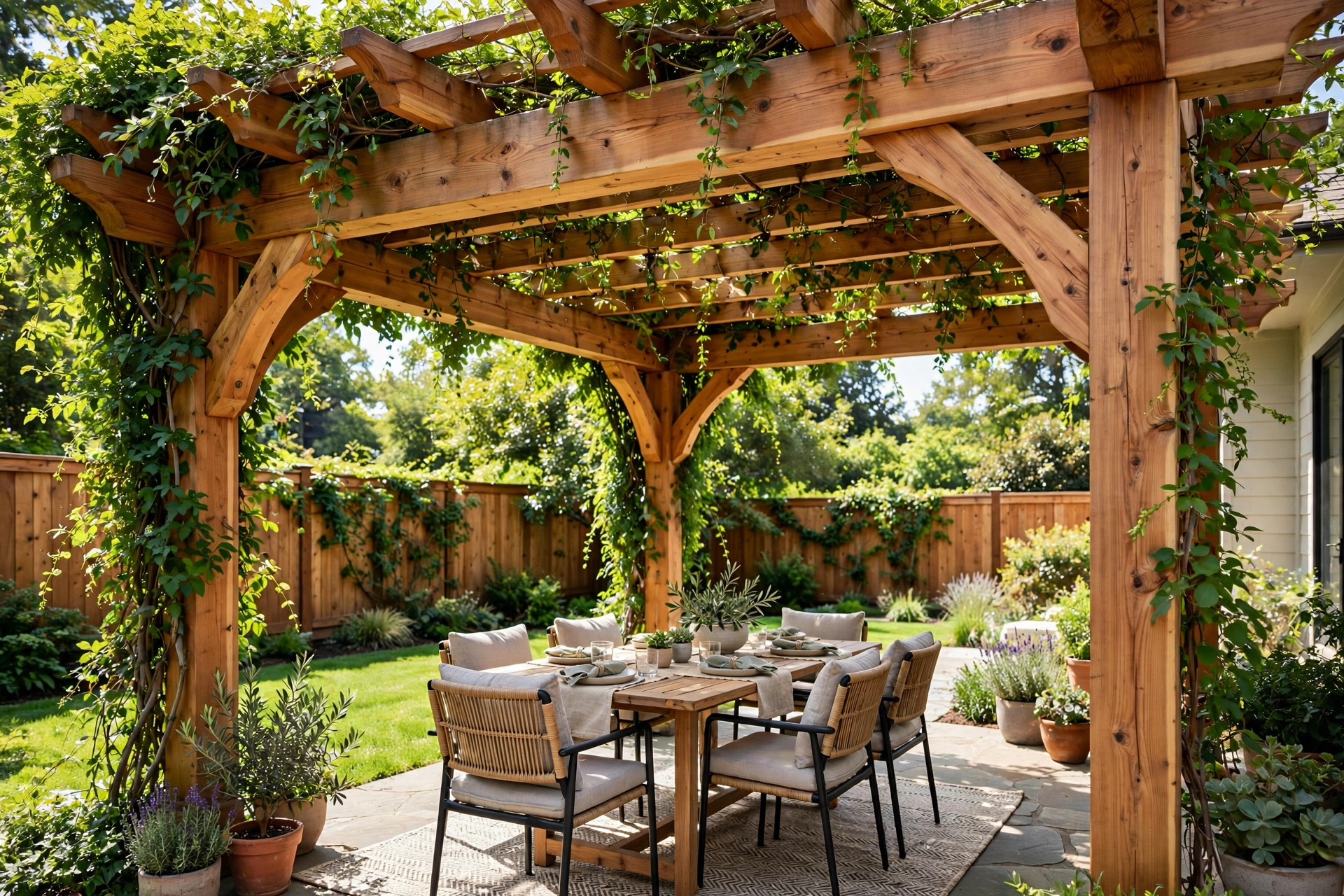
Wood pergolas: classic, customizable, hands-on
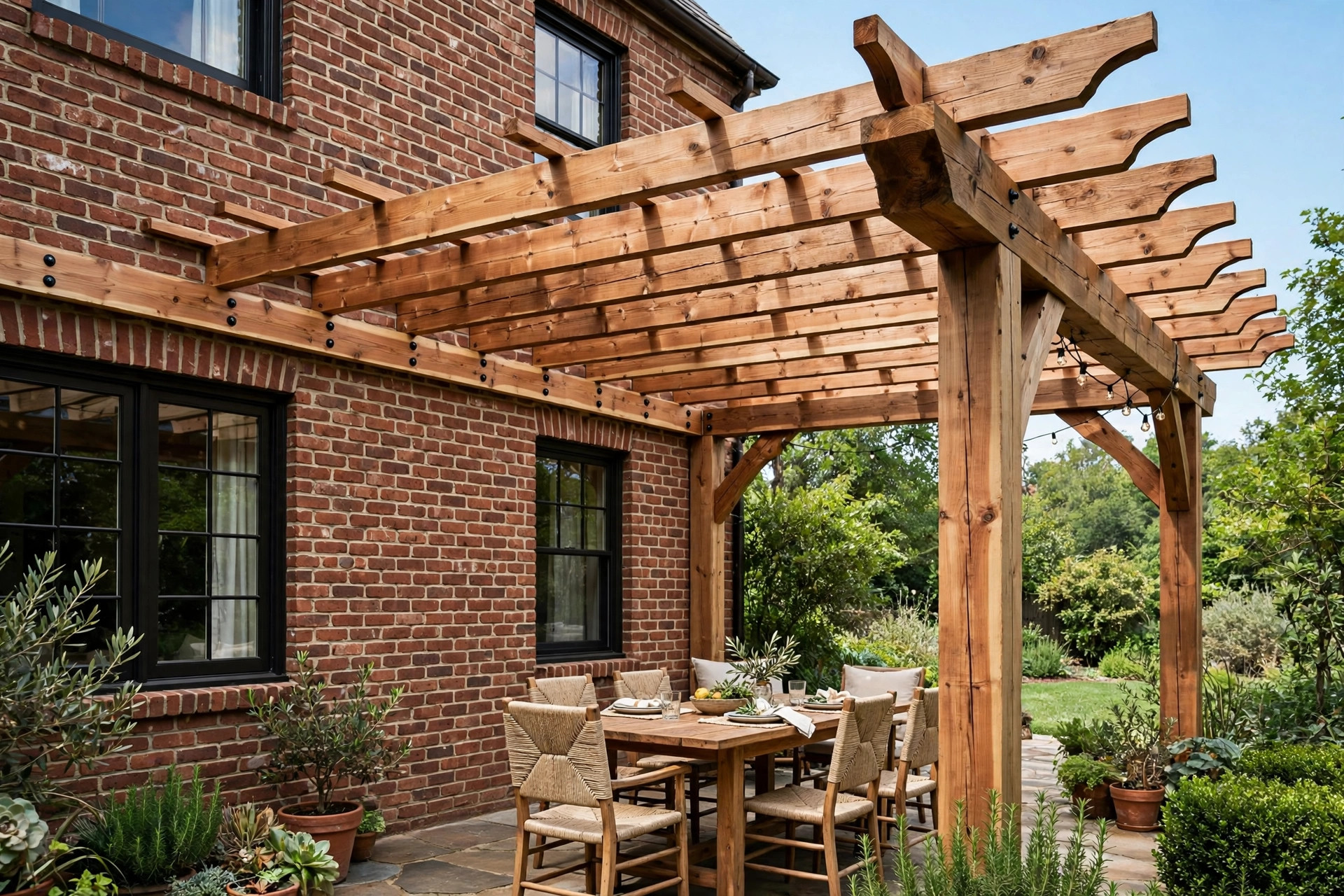
Wood is where the pergola began — cedar, redwood, and pressure-treated lumber, cut and shaped to any design you can imagine. Nothing beats wood for character, and it’s the perfect canvas for climbing vines. The tradeoff is maintenance: plan on staining or sealing every year or two, and expect roughly 8 to 15 years of life depending on species and care. Wood’s weight and movement make it better suited to freestanding designs with solid posts.
Aluminum pergolas: modern, zero-maintenance
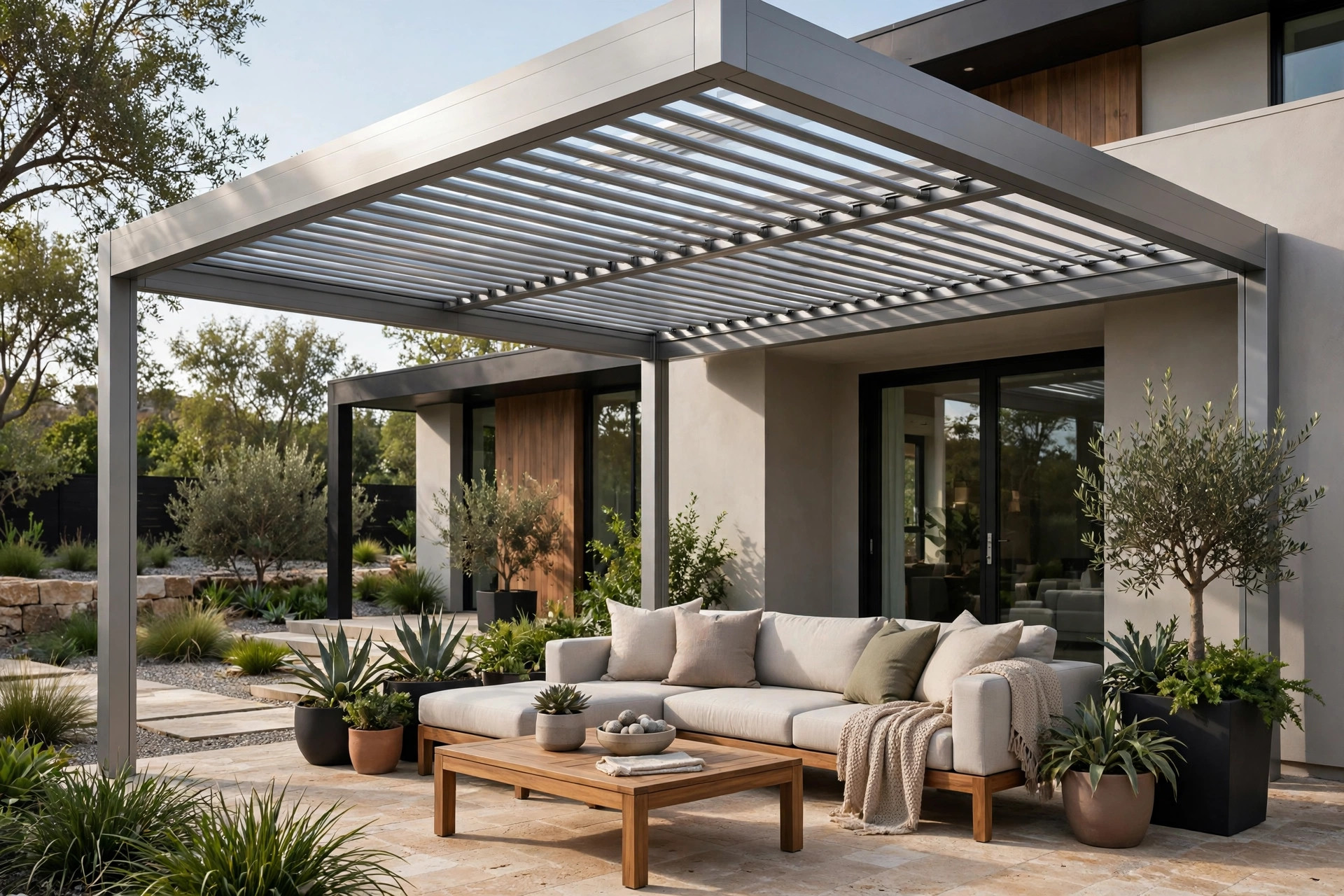
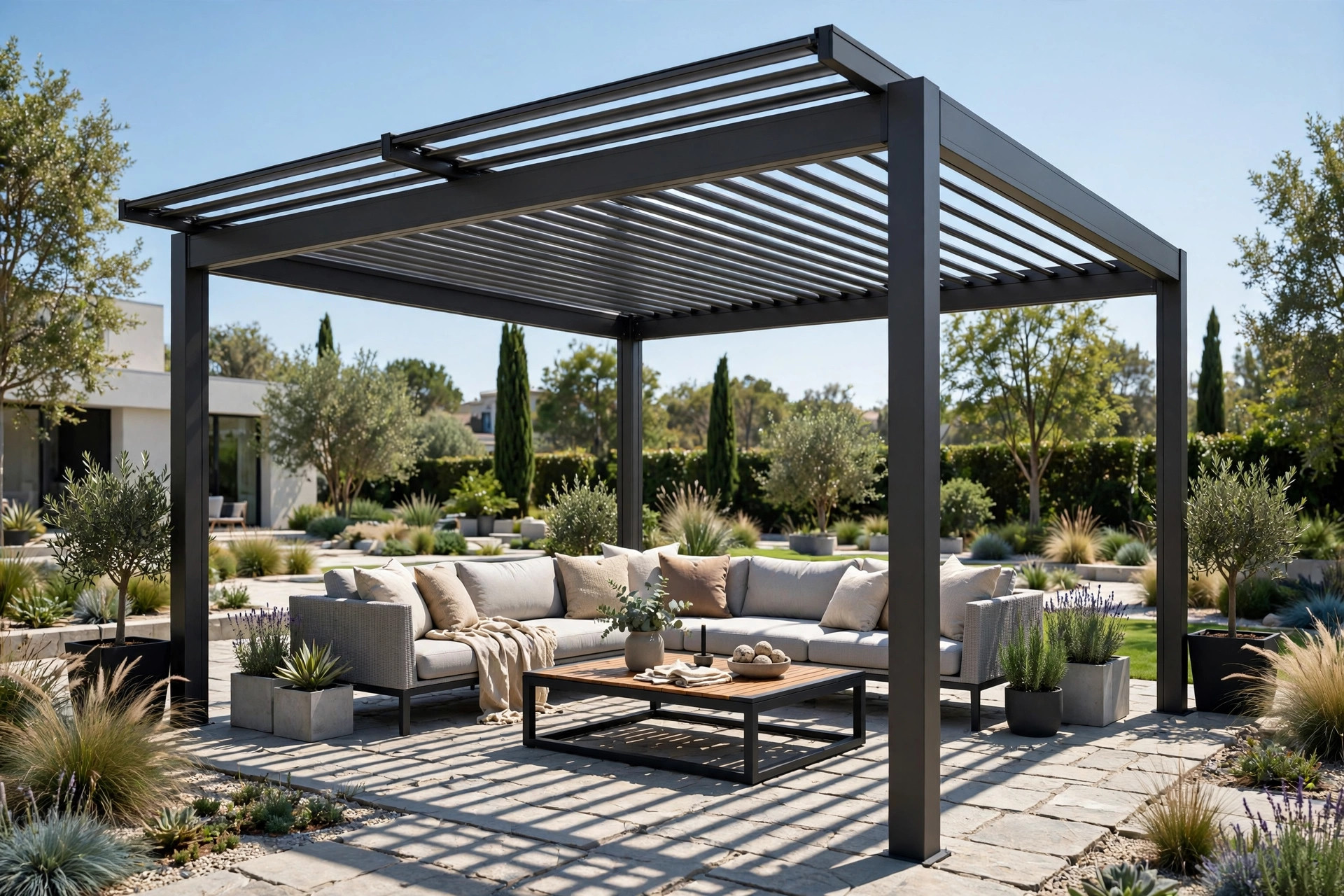
Powder-coated aluminum won’t rot, rust, warp, or feed termites — it shrugs off Houston humidity and storms for 25+ years with little more than an occasional rinse. It’s also the only sensible choice for motorized louvered roofs: wood swells and shifts with moisture, which binds up louver mechanisms, while aluminum stays dimensionally stable. The look is clean and modern, and the structure is strong enough for fans, lights, and heaters.
Vinyl pergolas: low maintenance, lighter duty
Vinyl never rots and washes clean easily, and it costs less than aluminum. The compromise is strength — vinyl is the lightest-duty option, can yellow or grow brittle after years of hard Texas sun, and isn’t the right frame for heavy add-ons like fans or louvered roofs. A fine choice for a simple, classic shade structure.
Attached vs. freestanding
Attached pergolas mount to the house with a ledger board — typically the most cost-effective route since the house carries one side, and they extend your living space into the yard with a seamless indoor-outdoor feel. The critical detail is flashing and waterproofing at the ledger so water never gets behind it. Freestanding pergolas go anywhere in the yard on their own footings, creating a separate outdoor room or focal point. They cost more upfront with full foundations, but offer complete freedom in placement and design.
Shade options
Open rafters give partial, dappled shade and are ready for vines. A retractable fabric canopy adds adjustable shade on demand. Louvered roofs — manual or motorized — tilt from open sky to full rain protection. A solid insulated roof is full shade and real rain cover, essentially a patio cover with pergola style.
Choose your pergola style.
Not every pergola is built the same. Pick the structure that matches how you live outside — from classic open beams to a fully roofed outdoor room.
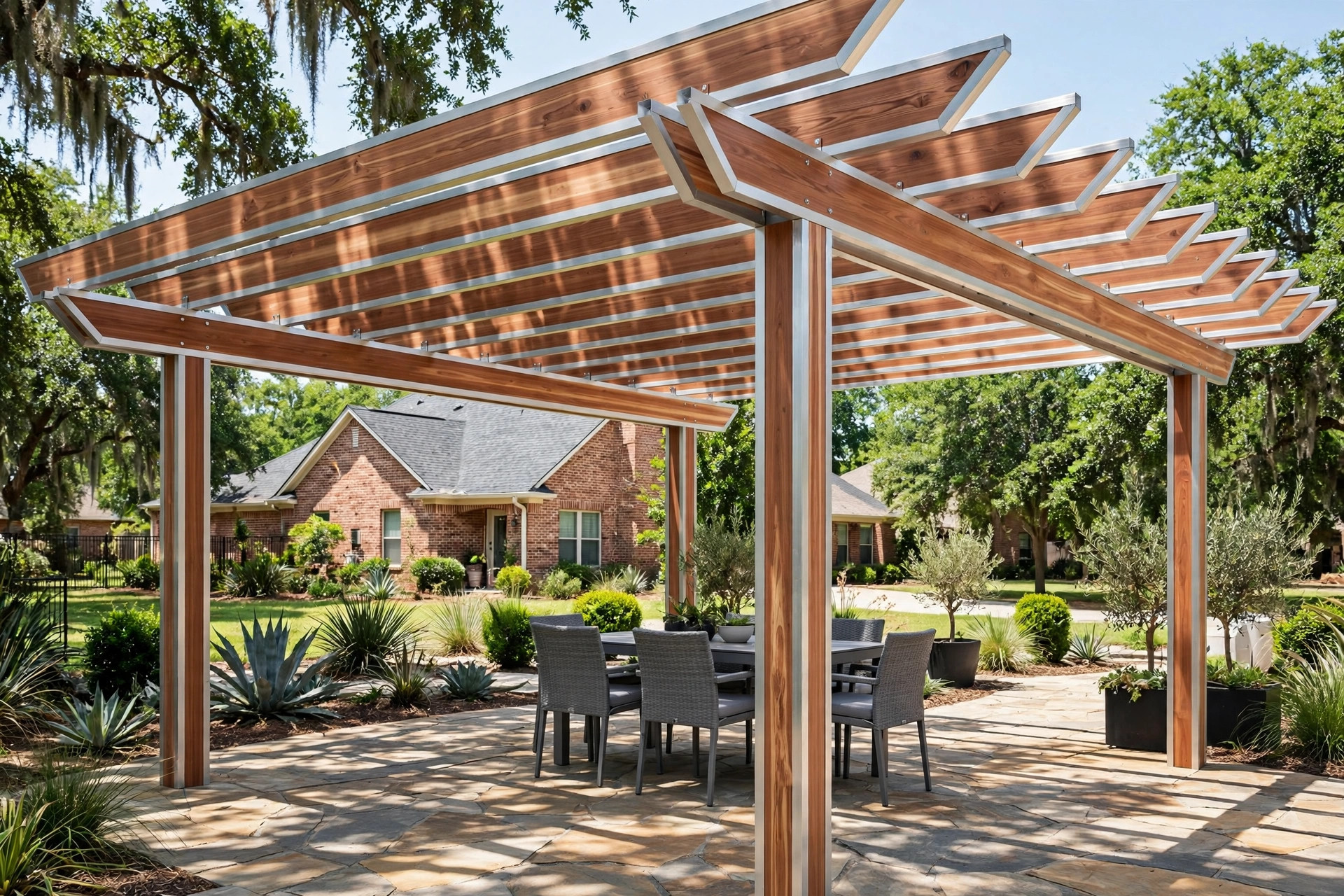
Open-beam wood-look
The timeless pergola silhouette — Santa Fe-style posts, 3x8 carry beams, evenly spaced rafters with decorative scalloped tails, filtered sunlight — in powder-coated aluminum with a convincing woodgrain finish. You get the warmth of wood with none of the staining, warping, rotting, or termites. Maintenance-free, rust-proof, and built to shrug off Houston humidity for decades.
AI design conceptDesign idea for inspiration.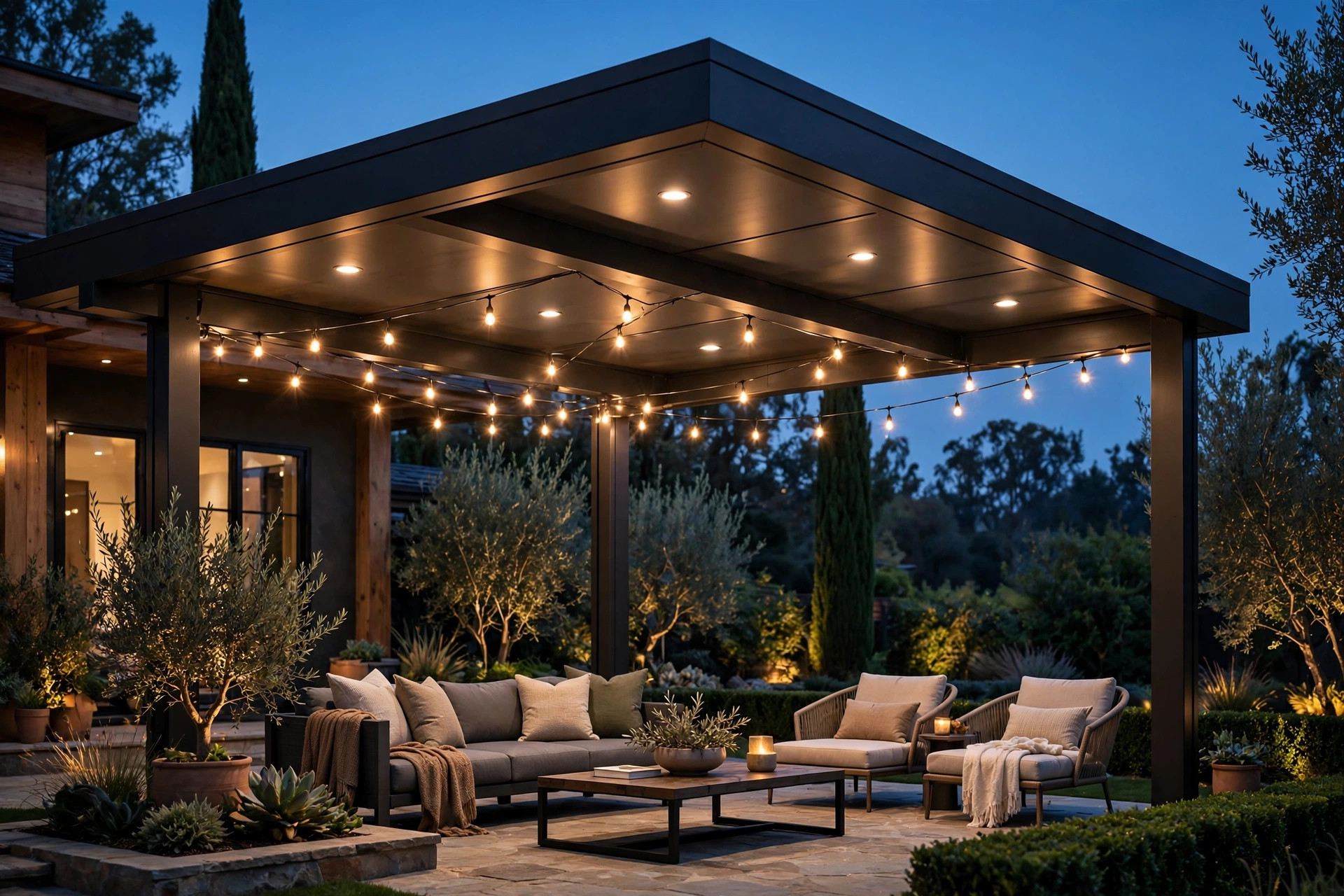
Insulated-roof pergola
Pergola style on the outside, real shelter on top: solid insulated roof panels carried on the same classic beam-and-post frame — full shade, full rain protection, and a foam core that blocks radiant heat. Add recessed lights and a ceiling fan and it becomes the most-used room of the house.
AI design conceptDesign idea for inspiration.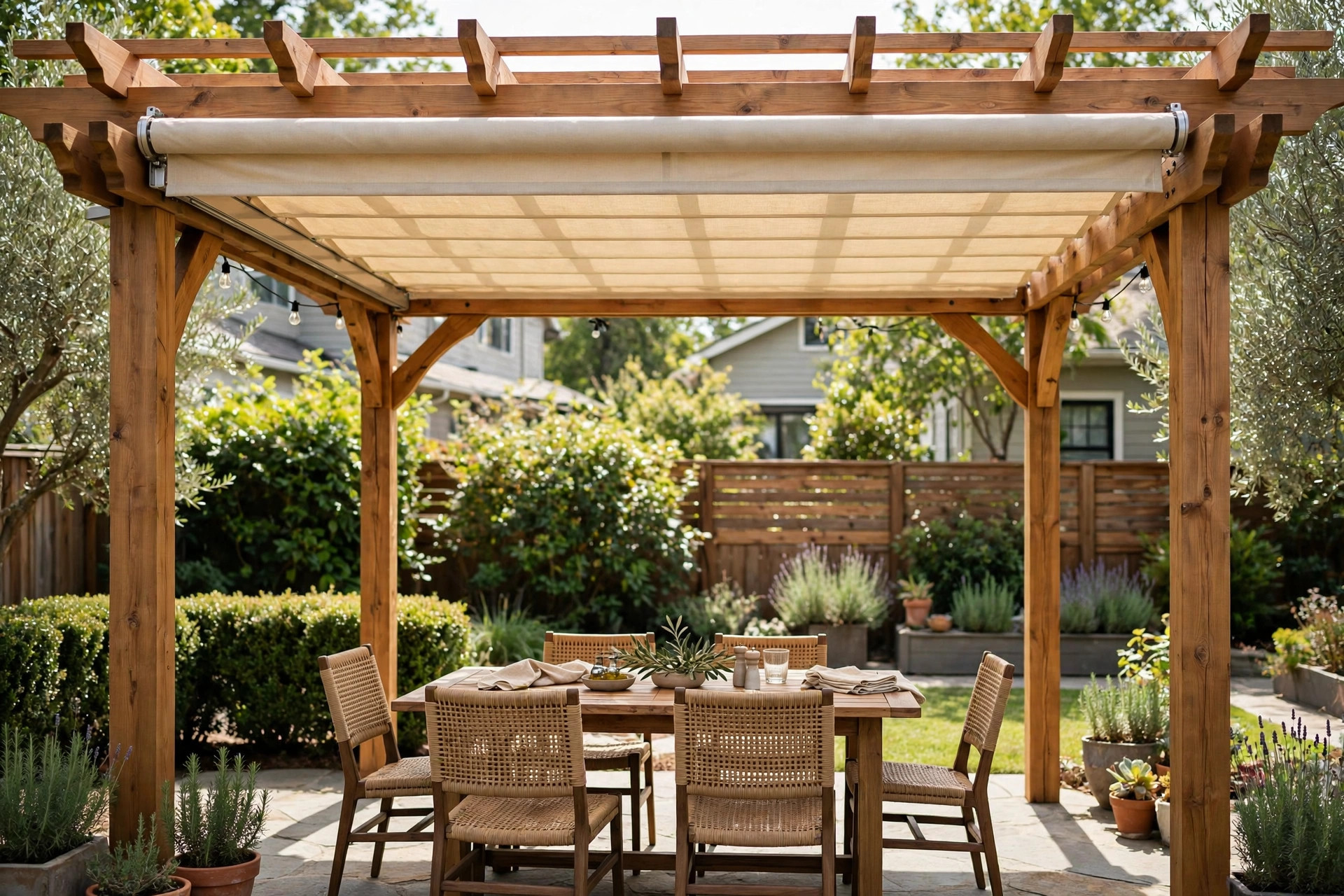
Custom shade mix
Why choose between sun and shade? We design single structures that combine open and covered sections — open sky over the grill, solid roof over the dining table — tuned to how your family actually uses the space and how the sun moves across your yard.
AI design conceptDesign idea for inspiration.The details that make it custom.
The difference between a pergola and your pergola lives in the details. Every build can be finished with:
- Santa Fe posts: the classic 6x7 profile with decorative post bases — the detail that makes an aluminum pergola look like fine carpentry.
- Scalloped rafter tails: a traditional curved cut on every exposed beam and rafter end — the signature craftsman detail, in crisp powder-coated aluminum.
- Color palette: whites, ivory, warm sands, bronzes, Spanish brown, and black in durable powder-coated finishes that hold their color under hard Texas sun.
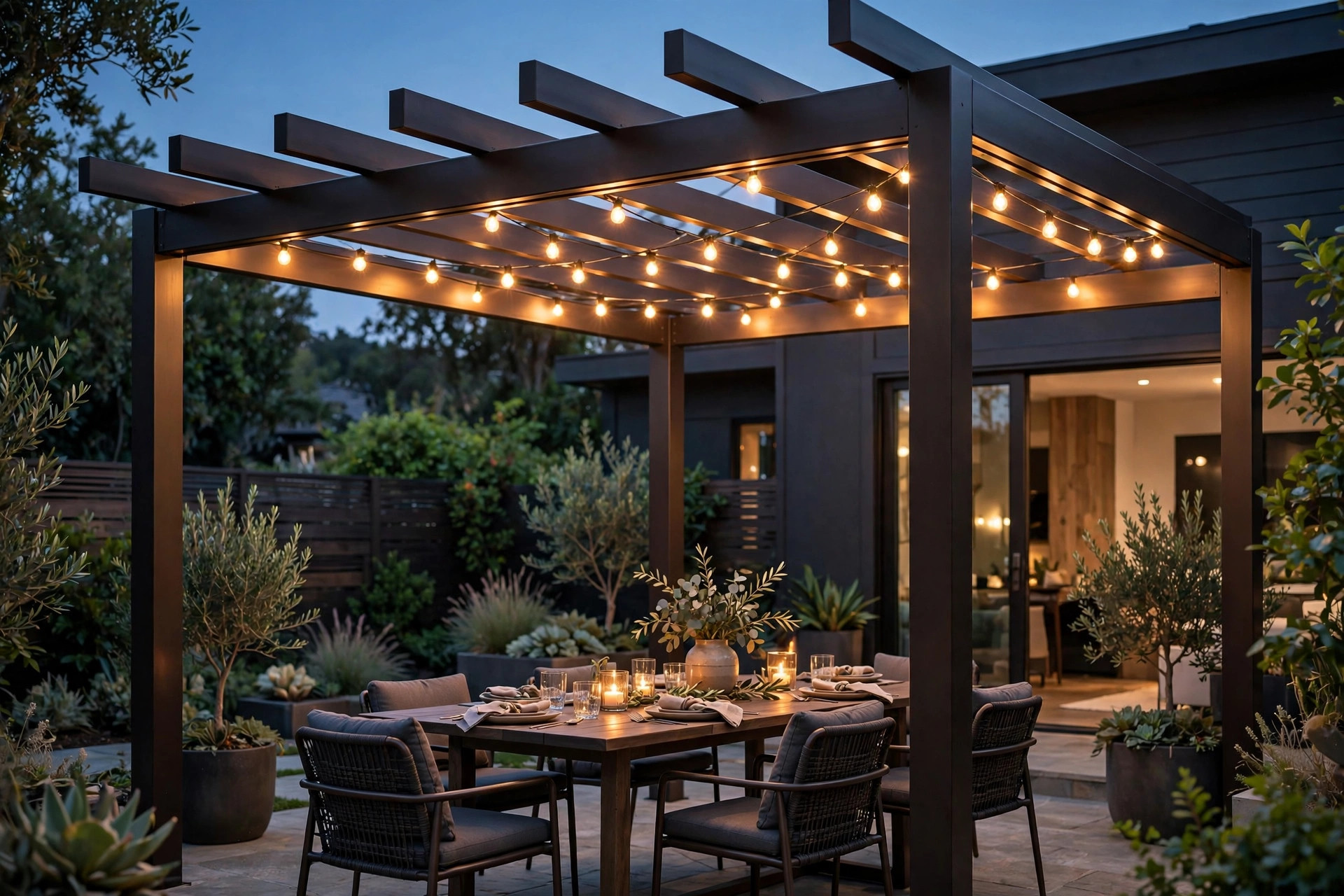
- Built-in lighting: recessed LED downlights in the beams or string-light mounting points, wired cleanly with no visible cords.
- Ceiling-fan ready: structures engineered to carry a fan, so August evenings actually move air — wiring concealed from day one.
- Engineered for the Gulf Coast: proper footings, connections, and bracing designed for our storm season and high-wind conditions, with engineered plans for permitting.
The Pergolas gallery
These are design ideas for inspiration — not photographs of completed IM Remodeling projects. For current jobsite updates, visit our Instagram.
Caring for your investment
Wood: restain or seal every 1–2 years, and check the ledger flashing yearly on attached builds. Aluminum and vinyl: rinse occasionally. After storm season, check hardware and footings on any freestanding structure.
Questions, answered
Wood or aluminum — which pergola should I choose?
Choose wood for classic character, custom shapes, and climbing plants — if you’ll keep up with sealing. Choose aluminum for zero maintenance, modern looks, and anything motorized or heavy like fans. We’ll walk your yard and recommend for your situation.
Attached or freestanding?
Attached costs less and blends indoor-outdoor living; freestanding goes anywhere and makes its own outdoor room. Both need proper footings and, for attached, careful waterproofing at the house. We handle the engineering either way.
Do I need a permit or HOA approval for a pergola?
Often yes, especially for attached structures. We handle permits and HOA approvals as part of our A-to-Z process — you don’t chase paperwork.
How much does a pergola cost?
Depends on size, material, attached vs. freestanding, and shade system. Book a consultation for exact pricing — it’s free.
Inspired? Let’s design yours.
Consultations are free — no pressure, no sales games.
Book your on-site consultation.
Tell us the room, repair or idea you’re considering. We’ll use your answers to start the conversation and schedule a time.
Storm damage or urgent home repair?
Urgent repairs can be done. Call directly so we can understand the situation and discuss the next step.