Straight concrete. Done right.
Driveways, patios, walkways, and slabs — plain concrete poured the right way: proper base, rebar in every pour, clean finishes and straight control joints. Built for Houston’s shifting ground and made to last decades, not years.
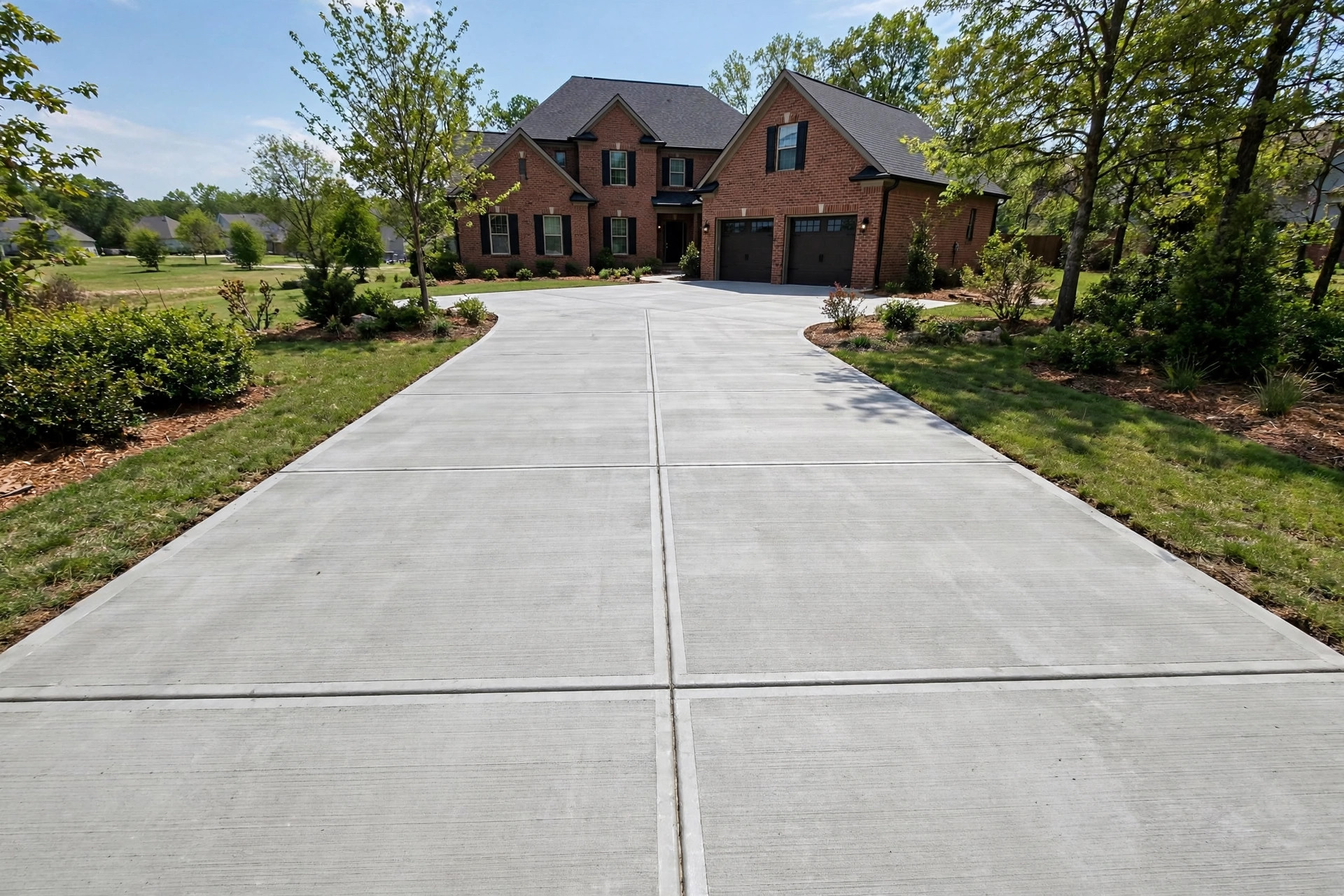
Concrete driveways
The workhorse of the house — and the first thing people see. We pour driveways thick, with rebar in every pour and control joints cut straight, so it handles cars, trucks, and Houston’s moving ground without breaking apart.
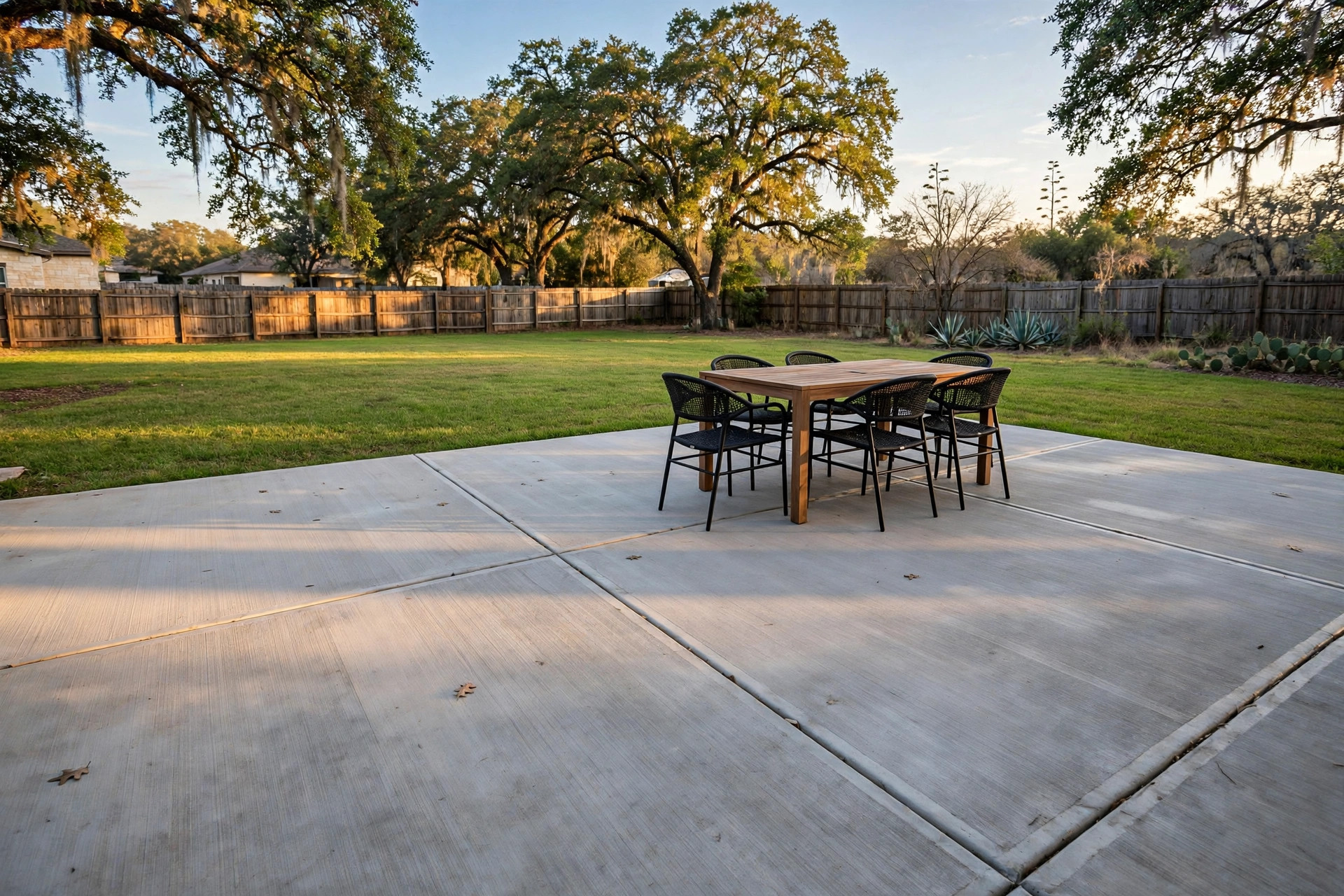
Concrete patios
A clean, solid patio slab that’s ready for furniture today and a patio cover tomorrow. Broom finish for grip, edges finished crisp, drainage sloped away from the house.
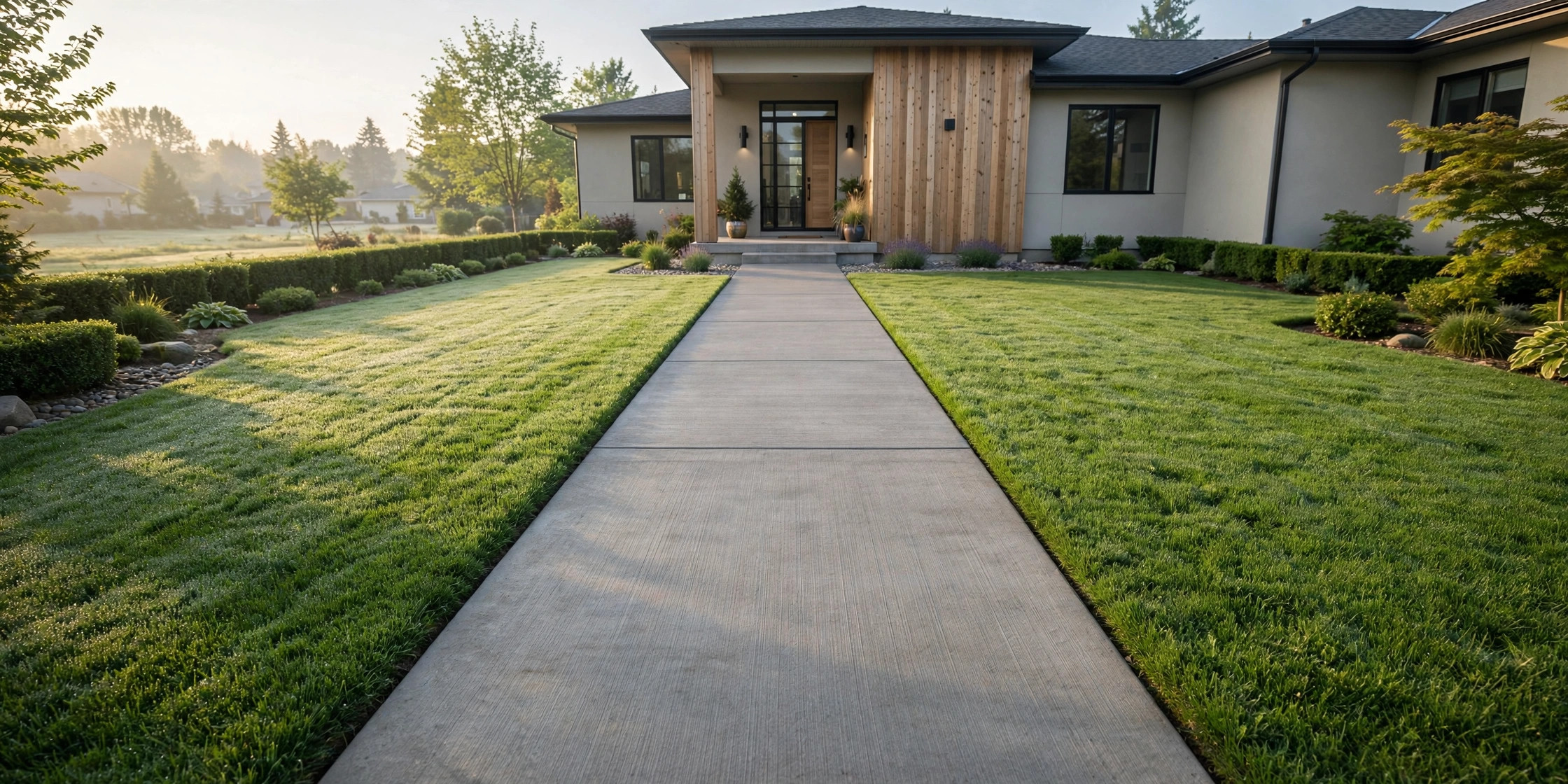
Walkways & entries
Front walks, side paths, and entry pads — straight runs with clean edges that tie the driveway to the front door and keep feet out of the mud.
Slabs, pads & extensions
Shed pads, AC unit pads, RV parking pads, and extensions tied into your existing driveway or patio — doweled in with rebar so old and new move as one.
It’s the finish that shows the craft.
A broom finish gives the surface grip so it’s safe when wet — and the direction of the broom lines, the crispness of the edges, and the straightness of the control joints are where you can see whether a crew cares. We finish every slab like it’s going in front of our own house.
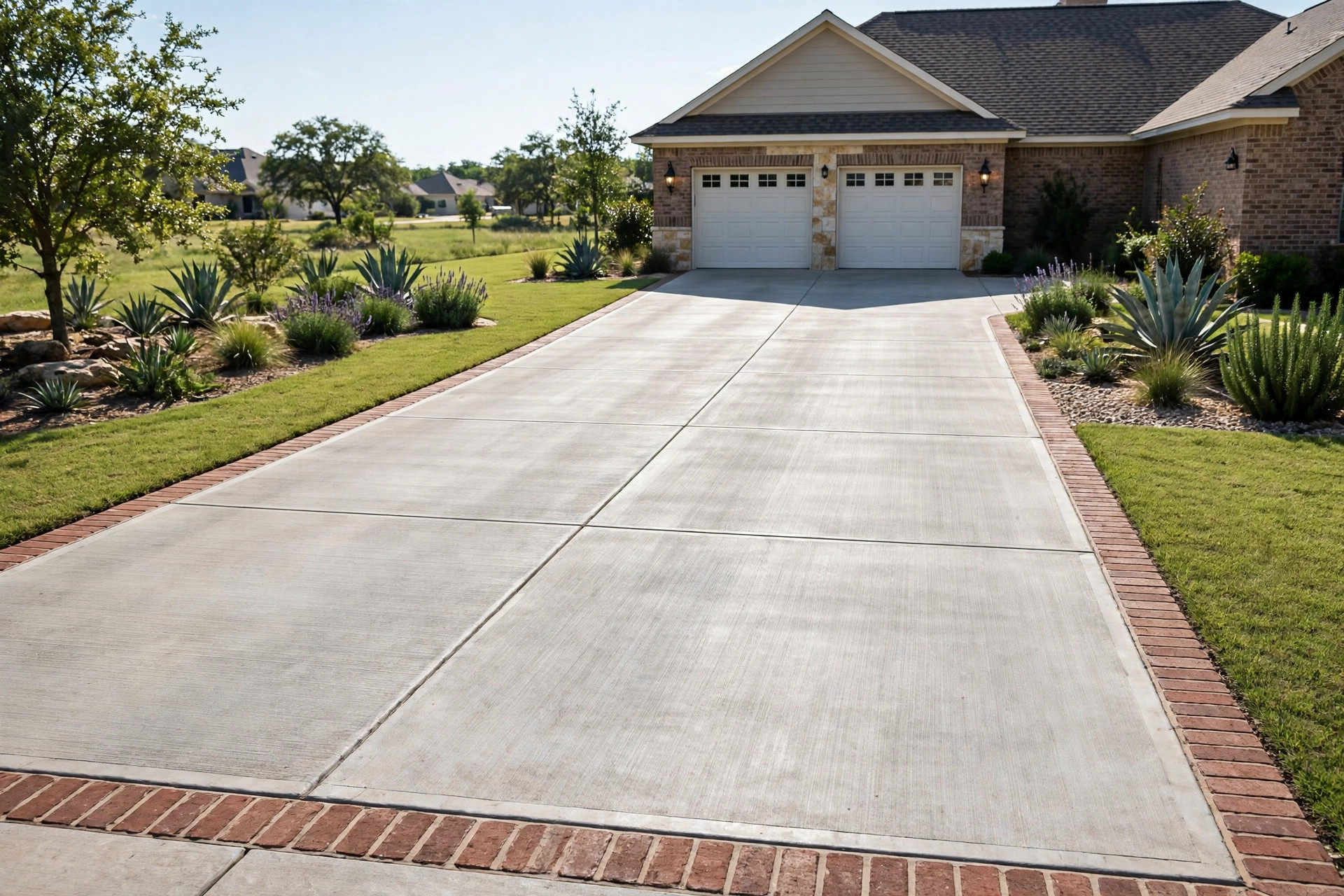
Driveways, patios, and everything flat.
If it’s concrete flatwork around a Houston home, we pour it. The most common jobs:
- Driveways — full replacements and new pours, thick enough for daily cars and the occasional heavy truck.
- Patios — backyard slabs sized for how you actually live: grills, dining sets, fire pits.
- Walkways & entry paths — front walks, side yards, and paths that connect the pieces of your property.
- Pads & extensions — RV pads, shed pads, AC pads, and extensions tied into your existing concrete with doweled rebar.
How we do it — and why the crew matters.
A patio costs real money, and we take your money seriously. We don’t just pour something and walk away — we build your concrete to last. No honest contractor can promise nothing will ever happen, but a slab with rebar tied in and the base done right is far stronger than a plain pour without it. That’s the difference between concrete that goes bad in a few years and concrete that stays good for decades.
Concrete looks simple — and that’s exactly why so much of it fails. The base is buried, the rebar is hidden, and you can’t see shortcuts until they crack and sink a year or two later. That’s why who pours it matters as much as what gets poured.
1. Measure & plan
We walk the property with you, measure everything, and talk through thickness, drainage, and where control joints should land. For bigger projects we can show it in 3D first — you approve the layout before a truck ever arrives.
2. Base prep
We excavate and compact a proper base for Houston’s clay soils. Most concrete failures start underground — shortcuts here show up as cracks and sinking within a year or two.
3. Form, rebar & pour
Forms set to grade with slope for drainage. Then we tie steel rebar into a grid and chair it up mid-slab — that’s where the tension lives, so the whole slab works as one piece instead of cracking apart. Where the new concrete meets your existing slab or the house foundation, we drill and dowel rebar straight into it, locking old and new together so they can’t separate or settle at different rates.
4. Finish
Broom finish for driveways, patios, and walkways — grip when wet, clean lines, crisp edges. The finish is where craftsmanship shows, and we don’t rush it.
5. Cut control joints
Concrete moves — we decide where. Control joints are cut straight and in the right places so any movement happens along the joints, not as random cracks across your driveway.
6. Cure
We cure the slab properly so it reaches full strength. You’ll know exactly when it’s ready to walk on and when it’s ready for cars — no guessing.
A slab you can put a patio cover on.
Because it’s one structural concrete slab — not loose units — you can anchor a patio cover, pergola, or outdoor kitchen right into it. Posts set solid, nothing shifts under them. Plan the patio now and add the cover when you’re ready; we’ll design for both from day one.
Same slab, dressed up.
Everything on this page pours just as well as stamped concrete — same rebar, same base, same crew. Stamped just adds stone, slate, brick, and wood looks with rich color worked through the slab. If you want your driveway or patio to look like natural stone instead of plain concrete, that’s the page to see.
Driveways, patios & walkways.
Design ideas for inspiration — AI-generated concepts, not photographs of completed IM Remodeling projects. Send us a photo of your driveway or yard and we’ll talk through what fits it.
Caring for your investment
Give it time to cure: foot traffic in a day or two, cars on a new driveway after about a week — we’ll give you the exact timeline for your pour. After that, there’s almost nothing to do: hose it off now and then, and keep heavy point loads off the edges. A sealer every few years keeps it looking sharp and shrugs off oil stains.
Questions, answered
Do you use rebar?
Yes — rebar in every pour. Houston and the surrounding areas sit on expansive clay soils, and the ground here moves a lot — swelling when it’s wet, shrinking when it’s dry. That’s exactly why the slab has to be strong. Steel bars tied into a grid and set mid-slab, right where the tension is, so the whole slab moves as one piece instead of cracking apart. And where your new concrete meets existing concrete — a driveway, the house foundation, an old patio — we drill and dowel rebar into the existing slab to tie them together. No separation, no lip forming between the two.
How thick should a driveway be?
Thicker than most people think — and thickness is only half of it. A driveway needs the right base, the right rebar, and control joints in the right places. We’ll spec your driveway for what actually drives on it, including heavier trucks.
When can I drive on the new driveway?
Foot traffic in a day or two; cars after about a week of curing, depending on weather. Rushing it is the easiest way to damage a fresh slab — we’ll give you the exact go-ahead for your pour.
Will it crack?
Concrete moves — we plan for it. Control joints cut in the right places give movement somewhere to go, and rebar holds the slab together as one piece. Proper base prep for Houston’s clay soils does the rest.
Regular concrete or stamped — which should I pick?
Same slab underneath, different look on top. Regular concrete costs less and looks clean and classic; stamped concrete looks like stone, slate, or brick for more. Both get rebar, both get the same base. We’ll price both and tell you straight which fits your budget and your house.
Can you tie into my existing driveway or patio?
Yes — we drill and dowel rebar into the existing concrete so the old and new sections lock together and settle as one. No lip, no separation line opening up over time.
How much does concrete cost?
Depends on size, thickness, access, and how much base work the ground needs. Book a consultation for exact pricing — it’s free.